Showing posts with label martyrdom. Show all posts

Tuesday, February 02, 2010

Wenden on a Pilgrymage

The guide books will tell you that Canterbury is the second most visited city in England. Since it is really quite a small place, that statistic--if accurate--is astounding. But then, Chaucer would have understood the draw.

When Geoffrey Chaucer wrote The Canterbury Tales he did something quite remarkable. He wrote them in English. Now maybe, it is not English as you would recognize it--here, have a go at it. These are the opening lines of the Prologue to The Canterbury Tales.


Whan that Aprill, with his shoures soote
The drought of March hath perced to the roote
And bathed every veyne in swich licour,
Of which vertu engendred is the flour;
Whan Zephirus eek with his sweete breeth
Inspired hath in every holt and heeth
The tendre croppes, and the yonge sonne
Hath in the Ram his halfe cours yronne,
And smale foweles maken melodye,
That slepen al the nyght with open eye-
(So priketh hem Nature in hir corages);
Thanne longen folk to goon on pilgrimages
And palmeres for to seken straunge strondes
To ferne halwes, kowthe in sondry londes;
And specially from every shires ende
Of Engelond, to Caunterbury they wende,
The hooly blisful martir for to seke
That hem hath holpen, whan that they were seeke.
Bifil that in that seson, on a day,
In Southwerk at the Tabard as I lay
Redy to wenden on my pilgrymage
To Caunterbury with ful devout corage,
At nyght was come into that hostelrye
Wel nyne and twenty in a compaignye
Of sondry folk, by aventure yfalle
In felaweshipe, and pilgrimes were they alle,
That toward Caunterbury wolden ryde.

How did you do? Not very well? Too many words that aren't easily recognizable? You are reading Middle English--which at times seems closer to German than modern English, especially in pronunciation, where you articulate all the consonants. So, "pilgrymage" (which we say as a three syllable word) becomes PIL GRIM MAH JA. Quite fun, reading and speaking in Middle English.

OK--what Chaucer was writing about was a group of twenty-nine pilgrims who are making a trip in April to Canterbury to visit the grave of Thomas Becket, who had been murdered in the cathedral. The remains of his body had been gathered up by faithful followers. Soon, miracles began to happen--and by the time Chaucer writes, two hundred years after Becket's death, pilgrims were traveling in droves to this site.

And they still go today--only, now they are called tourists. Maybe they don't expect miracles, but they can be awed. Tourists first go through a gate (not sure if pilgrims did likewise or not)--pictured below.


The cathedral that stands today would not have been what Chaucer's pilgrims saw. The soaring Gothic style of the cathedral (pictured below) was rebuilt in the 14th century, so it was not the cathedral standing there in Becket's day.


For 3 centuries after Becket's death, a shrine in Trinity Chapel was dedicated to Thomas Becket, who had been made a saint in 1173. But, with Henry VIII's break with the Catholic Church, and his establishment of the Church of England, Henry ordered thousands of Catholic sites destroyed. Among them was the shrine of Thomas Becket. Today, a simple candle marks the spot of the Becket Shrine.


The actual spot where Becket was slain still exists, but is today marked by a modern memorial. This site is simply called The Martyrdom, with the jagged steel swords on either side of the broken sword hanging over a simple altar. Thomas was praying at the altar when Henry II's knights stormed in and killed him.


One part of the cathedral that would have been standing in Becket's day is the crypt. Below the quire of the cathedral, the crypt shows Romanesque architecture. The low arches are dramatically lit by small lights.


The window placements are wonderful, catching the afternoon light. This entire area is marked by signs calling for SILENCE (and no cameras--but I put mine on silent and no flash, and took a few discrete photos).


This small chapel in the crypt is called the Jesus Chapel--the ceiling is marvelously decorated.


Outside the cathedral, few old buildings stand.


There is a lovely small healing garden, with walls on three sides. It is easy to imagine people seeking solace here.
So, that is the pilgrim report. In re-reading the opening lines of the Prologue, I am amused to find those pilgrims started out in Southwerk (part of London). Why? Because we too began our pilgrimage in Southwark (the current spelling) as that is where our hotel was. Not the Tabard, but something a bit more contemporary.
With a next post, I promise to be more secular.

Tuesday, August 15, 2006

The Power of Stories

Sometimes stories stay with us for a long time, and with their magical power weave a spell over our psyches.

As a child of missionaries, I remember being transfixed with
the story of Jim Elliott, and the other men with him, who died in the Amazon jungle. I don’t recall the precise year—probably late 1950s. For reasons completely unfathomable to me, I suddenly began thinking of him several months ago. (As I write this, I realize a possible reason—these events occurred in January, 1956, 50 years ago.)

Truth is, I couldn’t recall his name. But with the Internet, ferreting out such information takes just a few clicks of the mouse combined with a little savvy intuition.


It did not take me long to find several sites that recounted the story. The bare bones details—eager young college student burning with zeal—at Wheaton, no less—exhibits early some of the leadership qualities he will display later in his life. He meets and marries a young woman named Elisabeth and soon they are off to the Amazon jungle to carry God’s word to those indigenous people who have not experienced civilization much less hear God’s word.

Jim and Elisabeth team up with several other couples, young husbands and wives equally eager for the spreading of the gospel. They have, among their number, at least one experienced pilot. So for a few weeks after they reach Ecuador, they fly up and down a portion of the Amazon River. They have selected the particular target tribe precisely because that tribe had so little contact with the outside world.

The missionaries are powerfully motivated by the ringing words of Christ’s so-named Great Commission—“Go into all the world.” Well, this is certainly part of “all the world.”

It is equally clear they are mindful of the incredible danger involved in forcing contact with native tribes untouched by outside forces. So Jim puts a pistol handgun in his pocket. The plan is—if anything begins to go wrong, he can fire over the heads of the natives and scare them.

Having spent a couple weeks buzzing the natives and dropping gifts from on high, the men—for that is who is going to make the first contact—decide it is time for a face-to-face meeting. No more
deus ex machine.

They land, and soon a few native men emerge from the jungle. It seems there may have been some initial pleasantries exchanged. But then, suddenly and without warning, arrows and spears fly. One after another the five missionary men die.

And never a shot is fired. The pistol stays dormant in Jim’s pocket. By the time I read this detail from the laudatory Internet account, revelation hits me full force. He wanted to die! Why else fail to carry out the pre-planned warning shot?

This belief of mine is like a thunderbolt. When I first heard this story, as a child living in Africa with my missionary parents, I thrilled to the details, even as I was horrified at the possibilities. Of course, I romanticized the story. Might I lose my parents to belligerent natives?

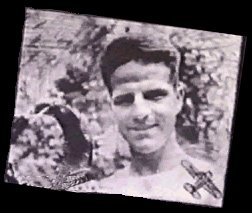
I have a mind’s eye picture of the photographs that appeared in a contemporaneous Life magazine—the smiling men alive, the small insignificant plane, the placid imperious Amazon, the bodies strewn along the banks or floating in the river.

For weeks, I fixated on the story, struck by the unnecessary tragedy of it all. I mouthed the names of the men. I noted the coincidence of family details—that Jim and Elisabeth’s baby girl was born in the mid-1950s, making her close to my sister’s age. I grieved as though these were lost family members.

So resurrecting the story recently renewed my old fascinations. And then I came upon that one unrevealed detail—Jim Elliott had a pistol in his pocket that he never fired.

Perhaps he was right to want to die. I doubt that he really sought to leave this life—to leave behind Elisabeth and their daughter. But, deep down, he may have sensed the consequences of his death. When the wives waiting back at camp did not hear the planned-for radio contact, they knew something was wrong. They tried to no avail to raise the men. Then a search party headed out, and soon the grim scene was discovered. All dead—all young men gone. Eventually, after the bodies had been retrieved, other missionaries did contact the natives. They even determined who had shot the fatal arrows—and redoubled their conversion efforts and succeeded.

While a student at Wheaton, Jim Elliott had written: “He is no fool who gives what he cannot keep to gain that which he cannot lose.” Could it be that is why he wanted to die?

As I said at the outset, stories stay with us a long time. This particular one has held me in its thrall since I was a child and even today I am both attracted to and repelled by the details.