Tuesday, January 18, 2011

Alexander the great

It is fashionable these days among some political circles to speak disparagingly of the country's debt. One of the most commonly repeated bits of "wisdom" is--we wouldn't run our own finances that way; how can we allow the country to go into debt?

To which I usually respond--poppycock. Of course, we all do (or most of us do)--we borrow money when we have need to buy some item for which we do not have the ready cash. How many of us have ever borrowed money? If you own a house on which you are paying a mortgage, you borrowed money. Or if you own a car that you bought on time. Or if you use a credit card and do not always pay the balance due at the end of the month. All these are ways in which we do, on our own small scale, what the country does.

Of course, we can argue the merits of how MUCH debt the country should have. But, really folks, arguing whether or not the country should have any debt is just plain...silly.

It was Alexander Hamilton who, though he was never president, did as much as anyone in those heady revolutionary days, to make it possible for the young country to succeed.

I would venture that if I were to ask you to rattle off what you know about Alexander Hamilton, you might say--in this order--

  • he was killed in a duel with Aaron Burr

  • he was a most important aide to George Washington, both during the American Revolution and also in Washington's cabinet

  • he was the bastard child of an Scottish father

  • he was born in the Caribbean

  • he was the first secretary of the U.S. Treasury

  • he was denied admission to Princeton (because of his bastard birth), and was then admitted to King's College (which became Columbia)

  • he was one of the primary authors of the Federalist Papers

All those things are true of Hamilton.

There are some slightly more obscure things about Hamilton.

He fought actively during the American Revolution, including leading troops in battle--the Battle of Monmouth.

He also had an affair which resulted in the U.S.'s first sexual scandal of a prominent politician--he admitted it publicly and since it was determined NOT to have any connection to his political position, it was eventually forgotten.

He had two sons named Philip. The first one was killed in a duel in 1801; the second son named Philip was born in 1802, not long after his elder brother had died, so he received the name of the deceased son.

He had a contentious political career, including a falling out with Washington, with whom he had worked so closely. In the presidential election of 1800, he worked against the candidate of his own party--John Adams who was the sitting president. When the election results were basically tied, Hamilton ended up throwing his support behind Jefferson (over Aaron Burr), giving Jefferson the win. Needless to say, Burr was not happy, and the enmity between him and Hamilton began to grow. Of course, we know it ended with the infamous duel in 1804.

I don't know what got me to thinking about Hamilton lately. Maybe it's because we recently passed his birthdate--he was born on January 11. Or maybe it's because I read a fascinating biography of him a year or so ago (written by Ron Chernow).

I think it most likely that I think of someone like Alexander Hamilton as I despair, listening to what passes for deep thinking from members of the so-called Tea Party on how to manage the country's economy. Alexander Hamilton, who helped create the U.S. Mint, who founded the first national bank, who recognized the need of the infant country to set tariffs, would roll over in his grave.

The talk of not raising the debt ceiling--so the country defaults on its debt obligations--would have garnered Hamilton's scorn. Hamilton took the mishmash of the financial system that had emerged during the period of the early confederacy of states, and honed it into a national unified system that stabilized the country and gave foreign investors the confidence to invest in the U.S.--in us.

There are many maddening by-products of the degree to which some politicians fail to know the history of our country. A few years ago, someone wanted to change the portraits on the U.S. paper currency, by placing Reagan's picture on the ten dollar bill. Part of the rationale was--we only have presidents' portraits on money--so get rid of Hamilton on the $10. Never mind that Benjamin Franklin's portrait graces the $100. It certainly wouldn't hurt if people today would pay a bit more attention to someone who was never president. Were it not for Hamilton--our Alexander the great--the United States might not be at all.
-----------
Source of engraving of the Burr-Hamilton duel: http://www.eyewitnesstohistory.com/duel.htm

The graphic of Reagan and Hamilton: http://money.cnn.com/2004/06/08/news/economy/reagan_hamilton/

Wednesday, January 12, 2011

Staying Alive

A syzygy of events has set me to thinking about time and mortality. First, I am approaching a birthday. Since I have been excerpting portions of my parents' biography, I will save birth stories until then (not much to tell, but at least it fits with the day).

Second, in a recent Facebook posting, a high school friend noted that it was her birthday, and she said--it's my party, and I'll cry if I want to. I know she was referring to the Lesley Gore hit of many years ago, but I couldn't help but respond. I wrote back--No need to cry--just laugh and enjoy staying alive.

While I am not approaching a really ancient age, I am of an age where staying alive is something to be celebrated. Which brings me to the third event in this alignment of inspiration.

Here's the
link for a longer version of this sad story. It seems an elderly couple were in our area this past Friday, visiting a daughter. They left at 5:15 p.m. to return to their own home, about 30 miles away. They never arrived. The family contacted police, and a search began. Then four days later, their car was spotted, and then they were found--both dead from exposure. Their car was found in Maryland--some 40 miles beyond their home destination. The conjecture is that they became disoriented and confused, and somehow drove until they ended up in a field. When their car got stuck, they got out and tried to walk to safety. They did not make it.

I have no connection to the people involved in the sad story. But, because of a nearness of circumstance--I too have aging parents about whom I am concerned when they go driving--the story struck a particular chord with me.

It is deeply grieving that the story ended the way it did for them. I am sure they too just wanted to stay alive.

Oh, maybe these thoughts are too disconnected and disparate. I am not at all melancholic about an approaching birthday. In fact, I am grateful to be staying alive.

Perhaps the most fitting conclusion here is to note that my husband and I got back to our local gym (after a hiatus due to holidays and travel). Just all part of staying alive.

(Now, head right over to YouTube and pick whichever version you want of the BeeGees "Staying Alive." Frankly, there were too many for me to choose one to post here.)

Thursday, January 06, 2011

On The Road Again

Disclaimer: I absolutely cannot take any credit for these three stories. They all came from my dad. But they were simply too rich not to share. All three were included in the biographical article.
---------------------

ROAD STORY # 1
From time to time, dignitaries from the United States would travel to visit the mission work in Africa. During one such time, there were two men, each going to a different mission. The one man visited my parents' work, and my father wanted to take him to an out-station. My father picked a school, which was south of Sikalongo Mission, down the escarpment towards the Zambezi Valley, where road conditions were very poor and the road quite steep. The vehicle they had was an older one, and the brakes were in bad shape.

Even with my father using the foot brake and the hand brake, it was all he could do hold the car on the steep decline. My father instructed the African helper who was along to find a big rock, and then get on the running board of the car. He then instructed the helper that if the car would start going too fast, my father would call out, the helper should jump off and quickly put the rock under the front of the rear wheel to help stop the car. The visiting dignitary was duly impressed with the conditions under which the missionaries worked.
--------------

ROAD STORY # 2
My mother also had car difficulties. On one trip that she and another woman missionary were on, the car got stuck in mud a few miles from the mission. Unable to extricate themselves, they saw a African riding by on his bicycle. My mother gave him a note to take to “Mufundisi” (meaning my father). Off he rode. Rather than wait, the two missionary women kept trying to get unstuck, and by perseverance succeeded. As they neared the mission, they encountered another African who flagged them down, and handed them a note to take to “Mufundisi.” It was THEIR original note!
--------------

ROAD STORY # 3
A more reliable means of transportation was a bicycle. Most of the missionaries had a personal bike. My father used his bicycle at times to visit out-stations. He would take a folded camp cot and a changing of clothing along. His African helper carried along minimum cooking equipment. On one visit to out-stations, my father along with another missionary man and an African helper, all on their bicycles, encountered a river swollen due to seasonal rains. Faced with this situation, the two missionary men (and presumably the African helper)decided to strip naked, hold their bicycles over their heads, and ford the river. Once safely on the other side, and reclothed, the other missionary man turned to my father and wryly remarked “That was a rich experience."
----------------

I hope you enjoyed these road stories.
Next time, maybe I will pull out some of the animal stories.

---------------
Please note: the woman pictured in the photo above is NOT my mother, but another missionary woman standing with her bicycle.

Tuesday, January 04, 2011

I Wonder Why...

If you were going on a trip, and you booked a plane ticket, would you want a pilot who has never flown before? Or one who has at least handled the controls in the cockpit a time or two?

If you were going to the dentist, would you want a dentist who had only read textbooks but never trained on real patients? Or one who knew how to fill a cavity with a minimum of discomfort?

If you were going to buy a birthday cake at a bakery, would you want a baker who had never read a recipe much less bake a cake? Or one who had turned out a cake or two, and had even decorated a few?

The examples could go on and on. . .

So, I wonder why it is that so many people in the United States are positively enamored with people running for political office who have no idea how government works? In fact, the candidates tout their lack of experience. They show up in Washington, D.C., (as they are doing this week), and make statements like--I don't live here...I don't want to spend my time inside the beltway...I just want to do what the people sent me here to do.

I can guess what that might be. Inexperienced legislators make a mess of governing because they don't know how to govern.

I hold no illusions about this new Congress. Sorry for the cynicism and bitterness. But I see very little good coming out of this governance by ignorance movement now afoot.

Sunday, January 02, 2011

Resolved: that...

One of the activities in which I participated when I was a college student was collegiate debate. Our small college had a relatively decent debate team, and--unlike sports--we competed against far bigger colleges. We had lots of exposure to other campuses as well as we traveled for intercollegiate competition.

There was a movie a couple of years ago that did a fairly accurate job portraying collegiate debate:
The Great Debaters. The movie had other points that it was making, and debating was only a vehicle for those themes. But, still, it helped show how debating can work.

Every year, all the colleges would focus on a single resolved. The first year I debated the resolved was:

RESOLVED: That the non-communist nations of the world should establish an economic community.

The next year it was:

RESOLVED: That the federal government should guarantee an opportunity for higher education to all qualified high school graduates.

It is interesting to me to note that, in part, the first topic has been realized with the European Union.

I debated on the affirmative side of the issue. That meant that I and my partner had to do the research to PROVE the resolution. The negative team also had to do research, but could also focus on pulling the affirmative team off topic. I don't think my partner and I won many debates, but the experience was memorable and enjoyable.

So, why this reverie on debating. Because the word RESOLVED leads me to think of resolutions. Resolutions are sort of personal RESOLVEDS that you take the affirmative on and try to prove.

Every year, many people engage in their own little debate--whether or not to make New Year's resolutions. I say--do it! RESOLVED: that making resolutions at New Year's is a good thing to do.

A quick word about resolveds. They should always be worded in the positive. So, you would not say RESOLVED: making resolutions at New Year's is not worthwhile.

But, I digress.

Here's why I like resolutions.

1. They give you a goal to focus on for the new year.
2. They help you affirm the possibility of possibilities.
3. They give you the opportunity to leave behind what was less than perfect in the year gone by.

I make modest resolutions.

I resolve to
--take part in a book club
--clean out my closets before they overflow
--have lunch with friends more frequently
--take longer walks.

I never make too many resolutions. Too hard to keep track of! And, one thing I never do. At the close of the year, I do not beat myself up for any resolutions unmet. I stay on the affirmative, and eliminate the negative.

So, are you on the affirmative on this question? Or the negative?

Thursday, December 30, 2010

Merry Olde England


Several months ago, my husband and I decided that it would be nice to spend Christmas with our daughter and son-in-law. They are currently living in England, so we began planning. Things began to fall very nicely into place.

After making sure such a trip would fit with their plans, we first secured a place to stay.

We made arrangements to stay at a pub with lodging rooms. The place has only 4 or 5 rooms, and bookings fill up quickly.


When we first walked in the door, we hesitated. The check in desk is...the inside of the pub. A very charming place--and with free Wi-fi!

Our daughter had made various arrangements to make our Christmas trip a festive series of events. Herewith, a quick review.

First, a Christmas concert at Royal Albert Hall.


Then on Christmas Eve day, a performance of The Nutcracker Suite Ballet--a Christmas favorite. The photo below is of the screen curtain before the performance began--no photos permitted once it began.


Afterwards, we walked down to see Parliament buildings, and the mounted guards.


For Christmas Eve service, we went to St. John's Wood C of E church. The service included a performance of Haydn's St. Nicholas Mass--a very small choir of only eight singers, but it was one of the best choral performances I have ever heard.


We had Christmas dinner with our daughter and son-in-law at their flat. Among the foods prepared--gammon. That is fresh ham. Everything was very tasty.


The day after Christmas, Boxing Day in the U.K., we walked first to Primrose Hill, where there is a commanding view of London, then to the Regent's Park. The sun sets quite early in the more northern latitude of London.


Our final treat, on our last full day in London, was a trip to the British Museum to see its current special exhibit on the
Book of the Dead. No photos from us, but you can get a taste of the experience if you visit the museum's website.

Somehow, we were fortunate enough to fly to Heathrow after all the problems that snow had inflicted on the airport, and we returned home after East Coast airports had reopened following the Christmas blizzard. Not sure how we did that, but we are grateful for traveling mercies.

So, it wasn't the twelve days of Christmas, but a lovely five days of Christmas.

Hope your Christmas was as merry and happy as ours.
HAPPY NEW YEAR to all!

Saturday, December 25, 2010

A Christmas Adventure


One of the most vivid of memories that I have, growing up as a child in southern Africa, is how the missionaries celebrated Christmas. It is quite a different thing to celebrate Christmas in the southern hemisphere. So many of our images—reinforced in carols and stories—are of an idyllic kind of Christmas, probably from the Victorian era. But, in a place where Christmas falls in the middle of summer, the images of celebrating Christmas are quite different.

In Southern Rhodesia, where my parents were, missionaries were in the habit of getting together around Christmas to have a Christmas picnic. With Christmas falling in the summer, a picnic was a natural way to celebrate. There was one indelibly memorable Christmas picnic, in 1958. The missionaries had gathered at Matopo Mission, in the heart of the
Matopo Hills (photo above on Matopo Hills taken by my nephew) near Bulawayo, for Christmas. The picnic location was one of the out-station schools, which was about eight miles from the main mission station. (An out-station school might consist of several rough buildings, but not proper enclosed building.)

The missionaries in Southern Rhodesia and their children were gathered, some 50 or 60 people in all. The festivities included a picnic lunch and a program that we missionary children had arranged. In the middle of a baseball game, it began to rain lightly, and then it poured. People dashed for the open buildings at the school to wait out the rain. They proceeded to eat the lunch, have the program and then readied to make their way back to main mission.

The road to reach the school included crossing a dry river bed. When the entourage of cars, vans and pickups reached the river bed, they now found a raging river. The rain that had disrupted the baseball game at the picnic site had dumped massive quantities of rain further upstream. There was no way to cross the river. Consequently, two missionaries men hiked back to the mission through the Matopo Hills. They were able to reach the mission without having to cross the river, as they did not have to follow the road. Once back at the mission, they got the mission tractor to drive back and rescue the stranded missionary party. The tractor had a diesel engine, so even though the water was still high, they were able to drive it across the river. They had attached a flatbed trailer to the tractor, and had brought along chains. The plan was that the missionaries could be loaded on the flatbed trailer. However, on examination, the adults finally decided they could have all their passengers inside the vehicles, and then hook up and tow each vehicle across the swollen river.

And that’s how the picnic ended. Bit by bit, the entire party was rescued. I can still remember how much fun we children had with this most adventuresome picnic. Now, more than 50 years after this event, I can still recall the Christmas picnic where we were flooded!

Tuesday, December 21, 2010

A Long Distance Romance

Even though my parents grew up in the same small church denomination, in many ways, their childhoods were quite different. My father's parents were missionaries. He was born in the U.S., but was a year and a half old when his parents went to southern Africa. Consequently, he lived there until he was ten. (My father, in the middle, pictured with his older brother, and his younger brother who was born in Rhodesia.)

Upon their return to America, for several months, he lived here and there, as his parents traveled around "spreading the word" of mission work. For three years, they lived in Oklahoma, from 1930 until 1933. Then, his father got a job teaching college in California, and the whole family moved there--right in the middle of the Depression as many people were moving from dust bowl states to California.

When my father was eighteen, and finished with high school, his father lost his job. So the family was once again rootless. They returned to Pennsylvania where his father took a temporary year long job. But times were lean, and his parents told him it was time for him to move out. He had no plans of where to go--his hope of going to college was dashed when his father lost his job.

It is around this time that my father saw "the girl in the yellow dress." My mother had grown up on a farm near Martinsburg, PA. Her family were very rooted, and she did not move around at all. Her only time away from home was when she helped at camp meetings--as she did the summer she met my father.

My mother was very hard-working as a teen.
Even though she was the fifth of eight children, all her older siblings had moved out. So, she did the majority of the work helping her parents. She wrote in her diary about all the work she did. She cleaned rooms, did laundry and ironing, stripped wall paper, hung wall paper, and painted. She dug gardens, planted flowers and vegetables, weeded, harvested and canned these foods. She milked cows, helped with hens, took care of peeps. She mowed the lawn, tended flowers and trimmed bushes. When it came time for butchering, she assisted with that task, too. (My mother and her father pictured at right, on the family farm.)

When my parents began courting in earnest, they mostly wrote letters back and forth. My dad worked on a farm, and my mother was either at home, or for a short time in Kentucky working in a home mission capacity. They saw each other only occasionally. In relatively short time of knowing each other, they became engaged, but kept it secret.

My father finally gathered enough funds to be able to attend college. He chose to return to California, a place where he had been very happy. So he traveled to California, while my mother stayed in Pennsylvania. She had not finished high school (because her father opposed education beyond 8th grade for his children). But she was determined to finish. Her brother persuaded their father that they did need to finish high school. So at age 20, she went back to school.

World War II interrupted and changed many plans. While my parents were able to complete their respective educations, they had to alter their wedding plans. Originally, they planned to wait a bit before getting married. However, my father's draft status had been deferred as long as he was in college. If he took a job as a minister, his deferment would be continued. So, they decided to move up their wedding date.

In the summer of 1942, my mother left Pennsylvania to travel to California. When she and her brother were both packing, to leave home as each was leaving home to get married, their mother helped her brother, but not my mother. My mother asked why--and my strict PA Dutch grandmother said gruffly--because he will come home again and you won't. It was true. My parents knew then that they wanted to go into mission work. In fact, before they got engaged, they shared their mutual desire.

So, my mother--who had rarely been further from home on her own than a couple of hundred miles--traveled by train across country. Once in California, she worked in wealthy homes and enrolled in some college courses. My father worked too and was a full-time student.

In October, 1942, they spent the morning decorating the college chapel, and in the evening of October 22, they were married. The reception (pictured at left) was held in his brother's house.

The long distance romance must have worked--they were married for 49 years, and the only thing that separated them was my mother's death.

Sunday, December 19, 2010

Home or Castle?


The concept that a man's home is his castle has always been hypothetical, at best, for me. Of course, understandably you feel that when you are in your own home, you should be safe. Generally, this concept is not tested--for most of us.

There is a sense that property crime is on the rise--at least in our area. Our local news reports more and more on robbery, armed robbery, home invasions, and thefts. We live near a modest sized city, and there has been a rash of incidents where people have been accosted by a small group of young men, sometimes with handguns, who rob the victim. Occasionally, someone is caught and charged, but not always.

To tell the truth, while such small time crime troubles me, since we live in the suburbs I did not feel too personally threatened. We also frequently travel into this city--although there are folks in the area who simply NEVER go there--because generally we do feel safe.
But two nights ago, we had a small incident in our neighborhood that brought the city problem to the suburbs. A neighbor of our, three doors away from our house, heard a knock at the front door. The teenage son answered the door, and there stood a young man, clad in jacket and cap and something across his face, with a gun in hand. He demanded cash. The teen's mother took a small amount of cash from a wallet, gave it to the armed man who fled.

As it happened, I walked Ziva--for her last time out before bed walk--around 10:45. This incident had occurred not 30 minutes before--so police cars were still in front of our neighbor's house. When one of the neighbors happened to emerge, I just said--what happened? And quickly learned the news.

Not much to tell, really. But such an incident sends little shock waves through a neighborhood. The next morning, our immediate next door neighbor came over to see us. She is a policewoman in the city, and she wanted to make sure we had heard the news, and would be properly cautious. She then asked what we do to protect ourselves when we walk the dog. Well, the answer is--nothing.

So, she went back to her house and came back with a can of pepper spray, police size and strength, and gave it to us. First, she gave my husband a brief tutorial on how to use it. And--she admonished us to carry it when we walk the dog.

Now, I have never conducted my life with fear as my main companion. I do not say I am foolhardy--of course, I try to use whatever street smarts I might have. I stay aware of my surroundings, and don't take unnecessary risks. But, an armed robber coming into our neighborhood gives me pause.

Then I examine what my real reaction is. Of course, I won't just open the front door after dark without knowing who is outside. But, I plan to keep walking the dog. This is MY neighborhood--no petty robber will drive me inside, clutching a can of pepper spray.

I must not be the only one to feel this way. Two nights before the incident at our neighbor's house, a would-be armed robber (this time with a knife) tried to rob a local mini-mart. This mini-mart is about 10 blocks from our house. The clerk in the store did NOT turn over cash, but instead tried to grab the shirt of the would-be robber, who then fled the store. Deep down, I harbor a suspicion that it's the same robber--who graduated from knife to gun. Yes, such a person as the would-be robber is dangerous. But he doesn't own the neighborhood.

I don't plan to hole up in the house. I will keep on walking the dog. I will look out for my neighbors, as they look out for me. And, since our neighbor gave it to us, I will keep the can of pepper spray at the door

Thursday, December 16, 2010

The Girl in the Yellow Dress

Author's note: I mentioned recently that I had submitted an article for publication (in a very small circulation historical journal)--and that when the article was published, I would use a few excerpts here. The article has been published, and the journal distributed. So I am not "scooping" myself.

This is the first of these excerpts adapted from the article--the story of how my parents met.

The story demonstrates several things. First, the church in which they grew up is a small denomination with Anabaptist connections. The Brethren in Christ probably had no more than several thousand members at that time, and members went to camp meetings in the summertime. Camp meetings were, then, a natural place for people to meet.

Second, dating in that time and cultural milieu was constrained and quite different from what people would understand today. Most likely, then dating would be referred to as "courting." My father's first move was to ask permission to write to my mother. When she consented, there ensued some years of writing. They did see each other, but infrequently. In a way, relationships developed slowly but also without much exposure to each other.

------------------------------------------------------------
“Who is that girl leading the singing?”—that was the question that my father David, then a nineteen year old, asked his brother Joel. The two were standing at the back of the tent where their parents were holding tent meetings near Granville, PA. But it wasn’t really the singing that interested David. It was the pretty young woman in the yellow dress. David thought she was the prettiest girl he had ever seen.

A shy young man who had only passingly entertained thoughts of courting any young woman, David was instantly smitten. But his brother Joel in giving his answer also sought to cool any ardor David might feel. “That’s Dorcas...” But, he added “If you’re getting any ideas about her, forget them... (she’s) all sewed up” referring to another young man.

This auspicious beginning might have given rise to an instant romance, but such was not the case. It was not until some four months later that David began to court Dorcas in earnest, when they began to correspond, the only real way to get to know each other given the miles between them.

David had been working on a farm in Lancaster County, Pennsylvania and had asked off work to help assist his parents in their move. Arriving after the start of the evening service, David slipped in the back of the tent. And that is when he saw the girl in the yellow dress. While he was very bashful, and made no effort to strike up an acquaintance, he made sure he came back the following weekend while the tent meetings concluded.

David's parents were in home mission worked, and were assigned to a mission in Stowe, Pennsylvania. They decided to begin their ministry there with tent meetings, and asked to have the young woman Dorcas assist them. She consented. And David made sure to hitch a ride to visit his parents in their new home, and to see Dorcas. Still, he made no direct contact with her.

It was not until December, 1938 (four months after first seeing her) that he finally worked up the courage to ask her if he could correspond with her. Happily, her answer, when it came, was “yes.”
------------

To be continued...

Monday, December 13, 2010

The Annual Letter


Yes, you know what I mean, don't you?

The annual Christmas letter. This is a tradition that I maintain, and that my husband...perhaps is less enthusiastic about. My contention is that it helps me keep up, ever so briefly admittedly, with family and friends--particularly those who are far away.

And then came blogging--and Facebook. Is it still necessary to keep up with far-away folk? I contend it is, and here's why.

For me.

That's right--you read correctly. The annual Christmas letter has become a kind of year in miniature about our family life. Oh, true, I try not to tell embarrassing things. And I omit those objectionable photos. But, each year I have written a one page letter, and now with computer technology, I can sometimes include a photo or two. I have these letters, still saved on my computer (I even went back in years and imported old letters!), going back to the early 1990s. So, I have almost 20 years of letters.

I can read through these letters and see snippets--my thoughts on our children's graduations from school, my grief on my mother's death, celebrations of marriages of our children, sadness on having pets die, joy at bringing new pets into our lives, fun times with friends, and other passages--retirements, Penn State victories. And on and on the list goes.

I do not keep a daily diary. I am just not disciplined enough to do that. Admittedly, now with blogging, I can also go back and read of some of these same events. But the Christmas letter is our lives for a year written in miniature.

So, I will keep the annual tradition. I will try to be sparing--not just the length of what I write (a page limit helps), but also of not sharing too much. But I will write.

And I will look forward to reading those Christmas letters we receive and that I read. Hearing about your lives in miniature too.

And now, the informal poll--Christmas letter:
yes? or no?
----------------------
Candy cane stationery available at http://www.northpolestation.com/printable-christmas-stationary-1.html
I can't help myself--GRRRR--stationEry when it is a letter. Of course, maybe they mean that the North Pole isn't moving, as in stationAry. But with global warming, it might ...

Wednesday, December 08, 2010

Unbroken

I just finished reading a terrific true story of a most amazing man. The book is Unbroken by Laura Hillenbrand, whose own story is most compelling. The book is a kind of biography of Louis Zamperini, an Olympic track star who was on a path to be the first to break the four-minute mile record. But, World War II intervened, and Louis went on to adventures that could have broken him, but from which he emerged unbroken.

Hillenbrand is also the author of an earlier book that I just loved--Seabiscuit. That wonderful book told the story of the racing horse Seabiscuit, and the same compelling story-telling talent of Hillenbrand that pulls the reader along in that work is employed in this most recent book.

Hillenbrand is herself an example of someone unbroken. She suffers from such debilitating chronic fatigue syndrome that she has been virtually house-bound for years. To conduct the research on Zamperini, Hillenbrand used telephone interviews over seven years, as well as reading endless accounts in diaries, unpublished memoirs, and the help of many people who were her legs in going to places where material was available.

I won't try to tell the Zamperini story--you can and SHOULD read the book yourself--except to give this briefest of outlines. Zamperini was born in 1917 (and is still living) and was a hellion as a youth. He found salvation in track, and actually went to the 1936 Olympics in Berlin. He hoped to go to the 1940 Olympics, but World War II interrupted that plan. Instead, Zamperini, like many young men in the U.S., entered military service. Eventually, he was a gunner on a B-24 Liberator bomber fighting in the Pacific.

His plane was sent on a rescue flight in the middle of the vast Pacific Ocean, and there it crashed. Three crew members survived, and floated on open rubber rafts--for 47 days--without food and water. Two survived, and were captured by the Japanese military. Then began his next survival crisis--he was shuttled to several Japanese POW camps.

Well, read the book.

Zamperini's story is most inspiring, and sent my mind in two directions. Both have to do with my own family stories.

When I first met my husband, as I was getting to know a bit of his family history, he told me that he had an Uncle John who was killed in World War II. John was the brother of my mother-in-law. He (like Zamperini) was a gunner on a bomber. The story that the family had was that John was "
flying over the Hump" when his plane went down and all crew were lost and presumed dead.

I don't know why I got to thinking about John and his fate, but one day when I was looking around the web, out of curiosity, I typed in his full name. Back came a site that finally unravelled his fate. While he may have flown over the Hump at some point, he died because he was captured and executed by the Japanese. His plane took off from one of the island locations that was part of the Pacific theater of World War II. This
account indicates that his B-29 was on a bombing run over Kobe, Japan (which occurred late in the war, in 1945):

The plane's . . . was referred to as the "Hull Crew" plane. It flew its missions out of Tinian Island.

On June 5, 1945, the "Hull Crew" were part of a 473 plane B-29 mission to attack Kobe, Japan. The B-29s carried 3,077 tons of incendiary bombs which they dropped east of Kobe . . .Out of the 11 crew members, four of them were never accounted for or found and were reported as Missing in Action. The remaining seven crew members were captured by the Japanese after being found floating in their life rafts.

The seven were eventually executed by their captors.

One of those seven was
my husband's uncle. I kept thinking of his fate as I read the story of Louis Zamperini. The threat of being executed was a daily reality for Zamperini. While he was a prisoner, Zamperini was very much aware of these bombing runs, and in fact the U.S. prisoners were greatly heartened by the awareness that U.S. bombers had laid waste to Kobe. It gave hope to Zamperini, and his fellow prisoners as it meant the tide of the war was turning.

The other direction in which reading Unbroken sent my mind was the value of first person accounts. Hillenbrand had the luxury of being able to interview Zamperini and other participants in aspects of his story. First person interviews are the life blood for writers who want to tell personal stories.

I have just had published (in a very modest journal) a biography of my parents. I will write some of it here, once the journal has been distributed. But, to write my parents' story, I had access to my father's own personal memoirs as well as to him. I could ask for recollections, and out of it weave a modest biography. It is most gratifying to tell the story of someone's triumphs and trials.

I am no Laura Hillenbrand, however. She is a first class writer, and I heartily recommend Unbroken--maybe you can put it on your wish list for Christmas!

Monday, December 06, 2010

No Shortcuts

Every year, I join the many folk who prepare for the holidays by preparing baked treats. I would venture that most of us have family favorite recipes we are implored (or even ordered) to make.

For me, it's butterscotch pie (from a recipe my mother-in-law gave me) and pumpkin pie made the Pennsylvania Dutch way.

And, it is especially Scottish Shortbread. There are no shortcuts to making shortbread. This simple tasty treat is a hand-mix all the way kind of recipe.

I got the recipe years ago from my Aunt Arlene. I lived with my uncle Arthur (my dad's brother) and his wife Arlene while my parents were on their last term as missionaries. I wrote a bit about her
here--she was the aunt who urged me to buy the practical coat. While she could be abrupt and severe, she could also bake up a storm.

Every Christmas, she made wonderful shortbread. And one year, she taught me how. I have tried to teach various family members who are interested--it really is a teach by doing kind of recipe.

So, here goes.

AUNT ARLENE'S SCOTTISH SHORTBREAD


The ingredients:
5 cups flour-take out 2 heaping tablespoons, replace with 2 tablespoons cornstarch
3/4 cup white sugar
Pinch of salt
3/4 pound of butter COLD from the frig

Slice butter into flour mix and work with hands until all flour disappears and it begins to stick together. Form a ball of dough in your hand, then break it apart. When it is thoroughly mixed, the dough will crumble into the size of small peas--


Put into a flat pan (I use one about 10 by 14)--


Press in very firmly and evenly--


Prick with a fork--


Bake in a 375 degree oven for 15 minutes--


Reduce oven heat to 350 degrees and bake until it is the color of rich cream--


Remove from oven, sprinkle with sugar --


Cut immediately--


into pieces about an inch wide by three inches long--


Place in an airtight tin.
Now the terminology in the recipe is exactly as my aunt had written out the recipe. I can tell you from years of experience making shortbread that it takes about 10 minutes after reducing the oven heat for the shortbread to become the color of rich cream.
I love that description--the color of rich cream--but it assumes an experience few of us have had. When whole milk was delivered from house to house, the milk bottles would sit at the door, and the milk would slowly settle. By the time the housewife (most likely) brought the milk inside, it would have settled. And the rich cream--a pale yellow--would have been on top. If this ritual happened long ago, the cream would be skimmed off and used for special food preparation.
Sadly, today, our milk is put up in plastic bottles, and most of us are so far removed from its production we have no clue what color rich cream is.
I also like the detail of the dough crumbling into pieces the size of small peas. Maybe that's how you can recognize an authentic recipe--homey little details such as these.
If you are a pie dough whiz, I think you will do well at making shortbread.
But, don't take any shortcuts!
-----------------------
Apologies on the photo orientation--Blogger got very weird and would NOT let me rotate some of the photos for correct view.

Wednesday, December 01, 2010

The New Kits in Town

This has been a year of saying goodbye to pets. We bid farewell to Tipper, waited a month and then got Ziva.

Then, in mid-November, our senior cat Cassidy finally succumbed to age and a nagging cold he couldn't shake. He had gotten the cold several years ago, and I thought he might not make it then. Knowing that time with pets is always fleeting and precious, I cherished every nuzzle with Cassidy, every purr he sent me way, every time he climbed under the bed covers and kneaded me. I needed him too. But, finally, it was time to let him go. You can see, in the photo below, how he was failing.


Whether we should wait longer between pets, or not, we simply enjoy having furry friends. So within a week or so, we headed off to the local humane society. It is always wrenching to see the poor desperate cats and dogs there. So, to steel myself, I had done my research in advance. I picked out two cats--one a more senior cat, and the other that had been abandoned at the shelter door. But, when we got to the humane society and asked to see THOSE cats, it turned out they had already been adopted.

Foiled.

So, we had to go into the cat rooms--the many many cat rooms. In a room near the back of the facility, we found two cats--in separate cages. One, a vocal male with a handsome "goatee" of orange. And the other, a six month old female kitten in that most ubiquitous cat marking of tabby.

Meet McGee. In keeping with the NCIS theme, he got the name McGee.

He is just gorgeous. His only flaw is a true snaggle tooth--a lower tooth turned sideways in his mouth, and somewhat protruding.


And here's Jennie. Friends asked why we didn't call her Abby (for another NCIS character). But, since we already had an Allie--Abby just seemed like a too confusing name. So, Jennie it is. She is all spunk and spoing. She bounces around, practically bouncing off the walls.


But she is SO cute.


McGee has discovered sitting by the window, watching the bird feeders where birds, squirrels and chipmunks gather. We have recently had the occasional hawk--but McGee seems unfazed by all the commotion.


And yet another cat in our lives thinks sitting on newspapers is a good idea.


Jennie loves (make that LOVES) food. Actually, they both do. But they are clearly very healthy and have been well-fed. Both were found as strays. They are "fixed" and micro-chipped. They have all their claws--a first for us. So, we will monitor clawing at furniture.


Allie, the now senior cat, has staked out her domain, in the study. I try to give her lots of protective space, so she doesn't feel displaced.
So, we are once again a three cat, one dog house. Fun, fun, fun...

Monday, November 29, 2010

A Magnificent Trio

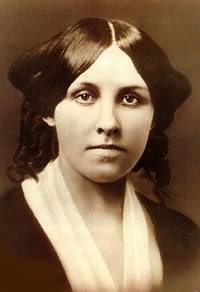
I wonder how many girls there are these days whose life-long reading careers start with Louisa May Alcott's Little Women? This marvelous book begins with these words:

"Christmas won't be Christmas without any presents," grumbled Jo, lying on the rug.
"It's so dreadful to be poor!" sighed Meg, looking down at her old dress.
"I don't think it's fair for some girls to have plenty of pretty things, and other girls nothing at all," added little Amy, with an injured sniff.
"We've got Father and Mother, and each other," said Beth contentedly from her corner.

With those four lines of dialogue, the reader is introduced to the four little women whose lives and personalities dominate the story. The reader is also introduced to each of their personalities in brief.
Well, the purpose of this post is not to go on about Little Women. It is to celebrate the lives of three marvelous authors, all of whom have one thing in common. They were born on this day.

Of course, since you are an astute reader, you will have gleaned that one of those three must be Louisa May Alcott. Though most of us would associate Alcott with New England, she was in fact born just outside of Philadelphia, PA. When she was two, the family moved to Massachusetts, where her father was involved in an experimental school as well as an early commune. Among the people with whom she interacted as a child were Ralph Waldo Emerson, Nathaniel Hawthorne, and Henry David Thoreau.

Her most famous work parallels greatly the life her own family was living. She had three sisters, and patterned her four little women on herself and her sisters. The Alcotts were poor, as were the Marchs. Her one sister died young, just as in the novel.

The second author of the magnificent trio born on this day is another author born in one country and mostly associated with another: C. S. Lewis. He was born in Belfast, Ireland. When he was a teen, he was sent to boarding school in England, a searing negative experience.

He wrote of that first encounter with England,
No Englishman will be able to understand my first impressions of England...The strange English accents with which I was surrounded seemed like the voices of demons. But what was worst was the English landscape ... I have made up the quarrel since; but at that moment I conceived a hatred for England which took many years to heal.

Of course, most readers would now associate Lewis with his long career both as a student and then as a professor at Oxford. There, he was part of a circle of friends that included J.R.R. Tolkein. While Lewis was a prolific writer, he is most associated today with his Narnia series, the first book of which is The Lion, the Witch, and the Wardrobe.

The last of the magnificent trio is Madeleine L'Engle. She has something in common with each of the writers above--obviously, like Louisa May Alcott, she is a woman author whose works are popular among young readers; like C. S. Lewis she is sometimes referred to as a Christian author. Her own growing awareness of religion was a sense that "all will be redeemed in God's fullness of time, all, not just the small portion of the population who have been given the grace to know and accept Christ."

I first encountered her works when our son was a young reader and enthusiastically read A Wrinkle in Time, and then continued on to other books in that series.

I realize that with 365 days in any year (excepting leap year), there are always serendipitous syzygies of authors. Today's alignment seemed particularly note-worthy. Hence, my magnificent trio celebration.

Monday, November 22, 2010

Let's Face It

So, I had a follow-up appointment today with a plastic surgeon. No, no, dear reader--I am not one of those vain folk who seek to alter their appearance. I am what I am--as Popeye said. But part of what I am is fair-skinned. German genes and all, I have red hair, blue eyes, and pale skin that only freckles (and burns if I am not careful).

That makes me obsessive about taking care of unexplained spots that appear and refuse to go away. I am careful to go to a dermatologist annually. A couple of years ago, I had a small spot under my right eye--I asked the dermatologist about it. He was dismissive--oh, it's nothing. But it stayed. I persisted, asking my family doctor about it. Eventually, when I got to a specialist who paid attention to my concern, it turned out to be a basal cell carcinoma, which had to be excised. So, obsessiveness pays off.

BUT, it can also be a bit embarrassing. Recently, I noticed two small spots on my face. Hmmm, could these be nascent basal cells again? So, I quickly made an appointment with a plastic surgeon. Last week, he did a punch biopsy (giving my husband endless amusement just to get me to say PUNCH biopsy). Today, I got the results.

A keratosis and a plain old flat wart. A wart? Really? It certainly did not look like any wart I had ever seen. But, it did embarrass me. Taking up the time of a plastic surgeon just to find out I had a wart.

Harrumph! And, embarrassed. But, but, but--I am very careful about not neglecting a budding skin cancer.

Sigh. . .

Oh, well--at least it gives me something to say at the Thanksgiving table--I am thankful that I don't have skin cancer.