Showing posts with label decision making. Show all posts

Thursday, March 07, 2013

ENOUGH!

When is enough enough?

This past week, most of the various national news media carried the story of an 87 year old woman in an independent living facility in California.  She collapsed during lunch, and--in keeping with the policy in place at the facility--staff called 911 for an emergency medical transport to come.  The 911 operator asked about the woman's immediate state--was she breathing?  And when the staff person said that the woman was breathing only faintly, the 911 operator sternly instructed the staff person--you have to start CPR right now.

When the staff person, identified as a nurse, demurred, the 911 operator became very insistent and said--she might die.  And, therewith, the focus of the story became clear.  The only fault seemed to be the refusal of the nurse to begin CPR.

But there are other questions that should have been asked.  Did the 87 year old woman have an advance directive?  Did she want CPR to be given in the event that she suffered cardiac arrest or some other catastrophic health event? What did her family want for her treatment? How effective is CPR?  What were her chances of survival even with CPR?  Perhaps predictably, none of those questions was asked--the initial news coverage seemingly tripped over itself trying to make the story as negative and sensational as possible.  I must, however, give credit to NBC which did begin to raise the questions.

We have been so accustomed to seeing CPR performed as part of a dramatic scene in a television drama that we most likely assume it always works.  But does it?  The short answer is no. 

One website indicates that CPR is rarely effective:
  • 2% to 30% effectiveness when administered outside of the hospital
  • 6% to 15% for hospitalized patients
  • Less than 5% for elderly victims with multiple medical problems
WOW!

Recently, my husband and I updated our wills, which--this time--included advance directives.  We want our preferences to be known to family and health professionals.  There comes a time when enough is enough.

This is not an easy subject to broach.  And the question goes beyond end of life care--it should even be raised in smaller ways.  Part of the reason that Medicare consumes the amount of money it does is because so many procedures are paid for.  True, they are paid for at Medicare's rate--but, to my knowledge, there is no information for patients that says "you don't  have to have every procedure a doctor recommends." 

I am currently helping my elderly father (93) and my step-mother (80) make various decisions.  I am struck by the number of times that a medical provider simply schedules the next appointment for 6 months.  True, these appointments are well-care appointments, and--generally--that is the best approach to medicine.  But when I picked my step-mother up from her recent dermatology appointment, the nurse scheduled her for a 6-month checkup.  So I pushed back a bit--why 6 months?  The nurse said--well, there' s a history of skin cancer.  So I asked my step-mother--how long ago?  She couldn't quite recall, but said nothing recently.  I have had multiple basal cell skin cancers--and I go for checkups once a year.

I suggested to my father and step-mother that they can decline to schedule appointments if they feel they are unnecessary.  To my thinking, this is especially true for simple skin care--skin cancers (other than melanoma) takes YEARS, even decades, to develop.  And is that a serious concern for someone in his or her 80s or 90s?  Please understand, I also ask myself the question--at my age. 

So, it all comes back to the question of when is enough enough?  I think part of American obsession with youth, with seeming never-ending life, feeds the tendency to think we must always intervene--always give CPR.  But, part of the human bargain is this: we are born AND we die. 

Sometimes enough is enough.

Tuesday, December 18, 2012

Telling

We are overwhelmed with the incredibly sad news of the events on December 14 in Newtown, Connecticut. 

One of the most wrenching details for me was about the way frantic parents had gathered awaiting news of their children.  One by one, children and parents were reunited, until—finally—there was only a handful of parents remaining.  While there was a protocol that was to be followed, apparently the governor of Connecticut thought that prolonging those parents’ agony was simply cruel, so he straightforwardly told them—if your child isn’t with you, they aren’t coming home.
Some people have criticized the governor for being so blunt.  But, his approach was the right one.

I don’t know if you have ever been in a situation where you have to be the one to tell the bad news.  I have. 
Many years ago, my father-in-law suffered a catastrophic health event, a dissecting aortic aneurysm.  He was rushed to the local hospital, and family members were quickly summoned.  We all gathered in the critical care unit awaiting news of his status as he underwent diagnostic tests.  During that time, the assembled family decided that someone needed to travel to his home town and be with his elderly mother.  That lot fell to me.

When I reached the home, I tried to comfort Grandma as best I could.  My father-in-law was her eldest child and very much a mainstay for her.  Suddenly, the phone rang.  When I answered, it was my husband calling to inform me that his father had not pulled through, and had died even before he could be operated on.  Something in my tone of voice tipped Grandma off—and, even though “the plan” was to wait until the pastor arrived to tell her, she demanded: Is he dead?

I had a choice—I could have postponed responding, temporizing and delaying the news until the pastor arrived, or I could answer her straightforwardly and honestly.  I chose the latter.

I replied simply: Yes, Grandma, he’s gone.  Immediately she began wailing and rocking back and forth.  After a bit, as I held her, she calmed down a bit.  I read some of the Psalms to her as she quieted.  Of course, my immediate telling in no way lessened her grief, but it gave her immediate information instead of making her stay in a suspended state, fearing and guessing the worst all the while hoping against hope it wasn’t true.

Of course, I don’t know if Governor Malloy was going through a similar calculus, but his decision to tell immediately was a small kindness in the midst of horrific grief. 

Sunday, November 11, 2012

Another One Bites the Dust

Well, it’s happened again. A powerful man is revealed to have been engaging in an extramarital affair. In this instance—the story of General David Petraeus—is a touch unusual. Instead of two women being involved, there are three—the wife, the “other” woman, and the “other, other” woman. So, not a triangle but a square? Rectangle?

The ingredients are so painfully predictable—the man is older, powerful, well-known.  The wife is also older, but for her age does not lend a cache of charm, but a burden of being (perhaps) past her prime.  She has been the home base while the general fought wars overseas.  True, she has her own career, and has made contributions working on alleviating the needs of military families.  Oh, how ironic. 

The other woman is younger, in need of a mentor, and—I wouldn’t be surprised—adept at charming the older man with flattery.  As the story is told, she made the initial contact with the general, and eventually got herself embedded (the irony piles up) with the military in Afghanistan while she worked to expand her doctoral dissertation into a full length book.  With the recent revelations of “the affair” sales of the book have soared. 

As for the other “other” woman, nothing is known—except that she apparently received threatening anonymous emails.  Because of their nature, it seems she contacted the FBI.  And thus began the investigation that unraveled the situation.  Of course, her presence does raise a niggling question—why was she perceived as a threat to the erstwhile mistress?  Don’t even want to go there.
Do you hear echoes of similar recent stories?  The New York Times chronicled the sad litany of some of the name of those involved in these affairs—Alexander Hamilton, Warren Harding, Franklin Delano Roosevelt, Dwight D. Eisenhower, Lyndon Baines Johnson.  And that doesn’t even bring us to the current transgressors—Gary Hart, William Clinton, David Vitter, John Ensign, Mark Souder, Anthony Weiner, John Edwards.  I even edited this list to shorten it!

So, what’s the lesson? That power attracts? That forbidden fruit is just too tempting? That great men fall? That we are all flawed? That in a digital age, there is no such thing as secrecy?

The truth is—I don’t know.  I do know that this particular revelation made me especially sad—sad for all involved.

Saturday, October 20, 2012

What A Difference a Day Makes

Well, could you make that a year.  No, how about a decade.  Or two decades--minus one year.

Nineteen years ago, when I was having trouble with my left knee, I had arthroscopic surgery.  I have inherited one of those lovely family genes (from my mother's side) which makes knees (and hips too, I fear) susceptible to extra wear and tear.  As years go by, the grinding increases along with the pain.

Nineteen years ago, my knee decided--yes, it does seem to have a mind of its own--that bending beyond a 90 degree angle was something it would not do.  So, I sought medical help from an orthopedic surgeon.  First stop was an X-ray.  The tech told me to lie on my stomach, and bend my leg as far as I could, so she could take an X-ray pointing down at my recalcitrant knee.  I bent it as far as I could--only to hear her say: can't you bend it more?  No, I muttered--that's why I am here.

Anyway, the verdict (I suppose I should say diagnosis) was Chondromalacia patella.  It sounds a lot fancier than it is.  In short, it means kneecap pain, which can be caused by wear and tear, torn cartilage, or misalignment of the knee.  Uh huh--I felt like I had all those. 

Eventually, the treatment was an arthroscopic procedure to "clean things out."  I don't know--but there is nothing particularly comforting to me about hearing a doctor say he (or she--but in this case, he) wants to clean things out.  Makes me feel as if I have been an untidy housekeeper of my own self. 

But, I had the procedure.  And, sure enough, I was able to bend my knee more than a 90 degree angle after that.  In my renewed vigor, I thought--well, I can run, and do those wonderful aerobic exercises that help one trim down.  Alas--running caused my knee to balloon in size.  So I stopped that. 

I resigned myself to bad genes and sore knees.  As if I needed final proof, while rummaging through photos in our basement, I came upon a college photo of me in basketball uniform (ooh, remember those cute little basketball pinnies?) and--lo, and behold--I had a brace on my left knee.

Fast forward to 2012.  This year, in a once-again renewed resolve to drop a few pounds, I began cycling (on a stationary bike) as well as continuing my walking of our dog.  I confess, my husband has been walking the dog more than I have, but I do try to get in one walk a day with the dog.  Anyway, the stationary biking turned out to be a bad idea--knee puff again.

So, once again, off to an orthopedic surgeon.  This time, I was less passive--maybe a bit more assertive--and I announced that if I needed a knee replacement, I was ready.  Well, the surgeon said--let's try this.  So first, a cortisone injection, which got me one week of relief.  Not long enough, he admitted, so the next step was an MRI (didn't have that 19 years ago), and arthroscopic surgery.  The MRI showed a torn medial meniscus, hence the anterior pain.

Well, I am now three days post-surgery.  And let's just say--the body doesn't bounce back nearly as fast as it did when I was in my 40s.  And, on top of that, the verdict is:  knee replacement sometime in the future.  How soon?  I will just have to let pain be my guide.

Oh, goody.

Thursday, August 09, 2012

An Open Letter to the Koch Brothers


When the history of the 21st century is written, historians will portray some as heroes and some as villains.  It is rare, indeed, for the same person to have an opportunity in adult life to be seen as villain and yet have it wholly within his control to become a hero.

Yet such is the case with the Koch brothers.  As history is being written by your actions, you would—as of now—fall into the villain column.  The extent of your villainy is yet to unfold.  But, with no change in course, you will now be tagged as the architects of the destruction of the environment, democracy and the Republican Party.

WOW! You say.  How can we two brothers, Charles and David[i], be responsible for all that?

So, I will summarize how.

First, the environment.  By far, this is the most serious legacy—obviously, without the environment we are all harmed, if not doomed.  You own Koch Industries, reckoned by Forbes to be the second largest privately held company in the United States.  Since you are heavily invested in fossil fuel production, you have not only enabled the world’s continued dependency on these fuels, you have fought environmental regulations at every turn.  You help lead opposition to reducing greenhouse gases.  Some of your activities were detailed in this story published in late 2011 in Bloomberg Markets Magazine.

Next, the Republican Party.  It is now known that much of the funding and impetus in the formation of the so-called Tea Party came from you or organizations you set up and funded.  The New Yorker detailed your political activities in Jane Mayer’s fascinating study.  With the rise of the Tea Party, which continually pushes the Republican Party further and further to the far right, the county is becoming increasingly polarized.  True, there are other causes of that polarization, but the coalescing influence of a kind of third party, which makes more and more in-roads into traditional Republican areas, does not result in a stronger Republican party.  Combine that effect with the vaunted tendency of Tea Party darlings to eschew compromise (witness the rhetoric of someone such as Rand Paul) and the result is not one which makes the Republican Party stronger. 
 
Finally, democracy.  The Supreme Court bears the blame for the horrific decision in the Citizens’ United case, but you have taken full advantage of the ruling that (as in Mitt Romney’s memorable words) “corporations are people, my friend.”  No limit is placed on money which can be given to super pacs which can practically buy elections.  Maybe not buy in the sense of putting money in someone’s hand and saying “vote for so-and-so” but very nearly that.  When who has the most money can determine the outcome of an election what we have is no longer a democracy.

So, here’s my challenge.  Think how history will portray you.  Think about the future of the world—of the lives of your children and grandchildren.  Is making money so important to you that you don't care if the environment is ruined beyond recovery.  Is controlling the outcome of elections so critical that you can't trust people to make their own decisions without your funding an ersatz political movement? Do you want your role as villains to be solidified?  Or would you rather be heroes?   The choice really is yours.


[i] There are two other brothers— Frederick and William—but in 1983 Charles and David bought out their shares in Koch Industries.

Monday, July 23, 2012

Burying Caesar

There are so many circumstances in life where some of the first words that come to my mind, to frame my response to a given situation, are those penned by Shakespeare.
As the continuing tragedy of what happened at Penn State over several decades unfolds, heroes once held high are thrown down and their memories trampled on.  With the sanctions decree of the NCAA being announced today, the words of Mark Anthony came to mind.

As with so many of the long speeches Shakespeare penned for his characters, this one is filled with nuances.  It gives, and it takes away.  I could almost read this speech and substitute Paterno's name for Caesar.  I don't know who would fill in for Brutus, for there have been many who have rendered judgment, sometimes in hopes of claiming higher moral authority than what they believe Paterno possessed.

Paterno has now been cast as the villain.  I don't know if he was or not.  It is all an ex post facto indictment to my thinking.  Since we know the outcome, we look back and at each step where we think Paterno "could have or should have" we render judgment as though he knew the end of it all, even at the beginning.  Of course, that is not possible.  Paterno himself indicated that he wished he had done more.

The Freeh report has painted Paterno as virtually all-knowing and complicit in every way from the beginning.  I am not convinced.  Reading a trail of emails, with indefinite references at times, can cause the reader to reach false conclusions, and having reached those conclusions can then give the reader the framework upon which to build a searing indictment of culpability. 

One administrator writes "after talking with Joe..." and the Freeh report concludes that Joe then knew.  But did he?  Do we trust the third hand report?  Too many questions. 

In case you have forgotten the Mark Anthony speech that you may have memorized in school, here it is.  You can substitute Paterno for Caesar, if you wish.  There is a certain resonance in doing that.  And while you are substituting, perhaps the name Freeh stands in for Brutus.

Friends, Romans, countrymen, lend me your ears;
I come to bury Caesar, not to praise him.
The evil that men do lives after them;
The good is oft interred with their bones;
So let it be with Caesar. The noble Brutus
Hath told you Caesar was ambitious:
If it were so, it was a grievous fault,
And grievously hath Caesar answer'd it.
Here, under leave of Brutus and the rest--
For Brutus is an honourable man;
So are they all, all honourable men--

Come I to speak in Caesar's funeral.
He was my friend, faithful and just to me:
But Brutus says he was ambitious;
And Brutus is an honourable man.

He hath brought many captives home to Rome
Whose ransoms did the general coffers fill:
Did this in Caesar seem ambitious?
When that the poor have cried, Caesar hath wept:
Ambition should be made of sterner stuff:
Yet Brutus says he was ambitious;
And Brutus is an honourable man.

You all did see that on the Lupercal
I thrice presented him a kingly crown,
Which he did thrice refuse: was this ambition?
Yet Brutus says he was ambitious;
And, sure, he is an honourable man.

I speak not to disprove what Brutus spoke,
But here I am to speak what I do know.
You all did love him once, not without cause:
What cause withholds you then, to mourn for him?
O judgment! thou art fled to brutish beasts,
And men have lost their reason. Bear with me;
My heart is in the coffin there with Caesar,
And I must pause till it come back to me.


Monday, October 31, 2011

Poisoning Democracy

I have just finished reading the excellent article by Jane Mayer, which appeared in a recent New Yorker magazine.  Entitled "State for Sale," the article chronicles the activities of Art Pope in North Carolina where he has successfully taken over the state legislature. How? you might ask.

Well, he bought enough Republican seats to change the state legislature in North Carolina--a state that voted for Barack Obama in 2008, and where both houses of the state general assembly had not been controlled by ONE party for a hundred plus years.

Here's how the article opens:  "In the spring of 2010, the conservative political strategist Ed Gillespie flew from Washington, D.C., to Raleigh, North Carolina, to spend a day laying the groundwork for REDMAP, a new project aimed at engineering a Republican takeover of state legislatures. Gillespie hoped to help his party get control of statehouses where congressional redistricting was pending, thereby leveraging victories in cheap local races into a means of shifting the balance of power in Washington."

The basic strategy was to go after elected officials and paint them as too liberal.  Throw enough money at something, and you can change people's minds.  And that's exactly what happened.

This strategy has eerie echoes of the current efforts of the Koch brothers.  In another New Yorker article--titled "Covert Operations"--Jane Mayer had also chronicled the Koch brothers' rise in political financing circles.  These billionaire brothers have set up various foundations which primed the pump by funding the "grassroots" rise of the so-called Tea Party.  No wonder some pundits refer to the Tea Party as an AstroTurf movement. 

Along about now, are you wondering--so what?  As the Mayer article on Art Pope unfolds, you learn that the tactics used were to target Democrats, throw buckets of money into ad campaigns that smeared these candidates and spread misinformation about them.  In one instance, a candidate who had dark hair and dark skin was identified as Hispanic.  The Pope money helped fund a campaign ad that showed the candidate with a sombrero and a tag line of "Mucho Taxo! Adios, Señor!"

What makes this disturbing trend of excess money being thrown into political campaigns is the recent Supreme Court decision on Citizens United.  You can follow the link to Wikipedia to read the basics of the case, but in brief the Supreme Court held that corporations WERE people and had First Amendment rights to free speech.  Thus, the Federal Election Commission could not limit the amount of money corporations could spend on political campaigns.  The result of this decision is that the election process is being flooded with money, with the sources largely untraceable, as reporting requirements do not apply in many instances.  One news commentator noted that another country--say China--could throw huge sums of money at a campaign to turn the outcome of an election in its favor on an issue such as environmental deregulation. 

The result of this convergence is, I fear, a poisoning of democracy.  Of course voters should be better educated.  Of course people should do their homework before they mark a ballot for a candidate.  Of course people should ignore ads that misidentify someone as Hispanic (never mind the so-what response that we really should give to such an identification).  We have lost far too much of our critical thinking skills as it is--can democracy really survive as a political system when the electoral process is so polluted by far too much money?

A recent Writer's Almanac included a quote from our second president, John Adams: "Democracy never lasts long. It soon wastes, exhausts and murders itself. There was never a democracy that did not commit suicide."

Thursday, August 05, 2010

In or Out

A little episode today had my heart racing for a while and my adrenaline level cranked way up.

My husband is an early riser, and part of his morning routine, at least in the summer, is to check our swimming pool. Now that we have "new dog" Ziva, he takes her along out. She loves to race back and forth in the fenced in pool area.

This morning, just before he went out, our one cat Allie jumped up on the window ledge looking out into the pool area, and "asked" if she could go out. So, he let her out. She found her way to a great hiding place, under some myrtle growing along the pool edge. Then he went out the side door, taking Ziva along into the pool area.

Ziva was checking things out, unaware that one of the cats was out there. Then, suddenly she spied (or more likely sniffed) Allie. And Ziva offered to play. Honest. That's all she wanted to do. Allie, however, took it as a threat, and that deep seated fight or flight choice kicked in. Allie chose flight. She bounded out of the myrtle, Ziva in the chase, and jumped onto a picnic table, and then over the fence which is surrounded with arbor vitae into the great unknown.

I awakened to hearing the excited barking of Ziva. Soon, my husband appeared in the bedroom, and I said--is everything OK? No, he said, Allie ran away.

I quickly got dressed and spent the next two hours walking all over our neighborhood. looking in nooks and crannies, under bushes and plaintively calling ALLIE, ALLIE. Or rather Allie, Allie. Trying to be quiet so as not to awaken neighbors. And also trying not to make anyone think I was trying to break in to their house.

When we couldn't find her, we decided she would have to find her own way home. She is NOT an outside cat; she does not roam around the neighborhood. So we really weren't sure where she might go, or if she would find her way home. I tried to think like a cat, and figure out where she might go. No success.

We left the gate to the pool slightly ajar (something we NEVER do for obvious reasons). After three hours, my husband looked out the window overlooking the pool, and there was Allie "asking" to be let back in.

So, the in or out question? We know people whose cats are roamers. And, yes, the cats do kill birds--that bothers me.
When we first got a cat, many years ago (and were ignorant of the issue of in vs. out), we started out leaving her roam outside. That is, until one escapade. She did not come back. I went out, looking, shaking her cat food box and calling her name. After a bit, I heard the faintest "meow". And there she was--our first cat, Missy--WAY UP in the neighbor's tree. Unable to come down. So my husband dutifully climb the tree, and coaxed her to jump on to him.

That was the end of any of our cats ever going outside. The exception are these brief outings in the fenced in yard, while we are outside. Our cats have NEVER caught a bird. The most any of our cats ever did was capture a chipmunk, that the one cat then BROUGHT in the house. The poor chipmunk was scared almost to death, running around squeaking while three cats watched, puzzled.

So, on the IN OR OUT debate, we are decidedly IN people. And that is even more reinforced after today's little episode. I suspect it will be awhile before Allie "asks" to go out again.

Wednesday, May 19, 2010

On Not Going to the Movies. . .

For long-time readers of this blog, you know that I love going to the movies. Would you believe there was a time when I stopped going altogether?

Why, you might ask? Well, I went through a (ahem) religious period during my college years when I was attending a small liberal arts Christian college. The teaching at the time was that movies were at the very least questionable. In fact, they just might be. . .immoral.
Anyway.

One incident from my childhood illustrates this antipathy toward movies. When I was about 8 years old, my parents and I (and younger brother) were staying with my paternal grandparents. At the time, my favorite aunt was living near by, and she had me with her for a day of entertainment. Somehow, she decided to take us to the movies. She swore me to absolute secrecy, as my grandfather sternly disapproved of "the movies."

I have NO recollection what the movie might have been. She might remember. Whatever it was, it thrilled my small girl self. And, the moment we returned to my grandparents' house, my promise of secrecy went right out the window. As my aunt recalls it, we got back to the house and I ran inside and PROMPTLY announced--
guess what, Grandpa, we went to the movies!

My sternly disapproving grandfather sternly disapproved indeed.

That antipathy did not really spill over into my personal choosing to see movies. I recall seeing the Walt Disney movie "Fantasia" when my parents and I (and younger brother) visited California, during this same time. And, as a student attending boarding school when we returned to (then) Rhodesia, I went to see movies on our Saturday outings.

But, for some reason, when I began as a freshman at college, I was seized with the conviction that movies were immoral. I eschewed them for quite some time. And, then the movie "The Cardinal" came out. Some of my college girlfriends were going. Did I want to go? Did I?

I must have worked around in my reasoning, because I decided--OK, after all the subject matter is religious. I went. I found the movie most entertaining, if not somewhat maudlin. What I particularly remember about this movie is one scene where the central character, who is by now a cardinal (hence the title), learns that his sister is pregnant. When she is due to deliver her child, she learns that the baby's head is too large for the mother to safely deliver. The cardinal is faced with a decision. Give permission for the fetus's head to be crushed, and the sister thereby saved OR refuse permission in which case his sister will die.

He chooses the latter course. At the time, I was thunderstruck. How could someone make such a choice? Choose an unknown infant's life over the life of his own sister? As a confirmed Protestant, I was also quite relieved to not have that burden as part of my own religious understanding. I might give up movies for a time, but giving up your own sister? Never.

So, what triggered this rather peculiar memory and walk down memory lane? The
current news--that's what.

Herewith, the barest of details: a 27 year old woman was admitted to a Catholic hospital. She was eleven weeks pregnant with her fifth child. She was diagnosed with right heart failure, and doctors told her that she had 100 percent likelihood of fatality if she continued with the pregnancy. A hospital administrator who was a nun, Sister Margaret McBride, gave approval for an abortion to be performed, as permissible under Catholic guidelines that allow some procedures that may result in a fetus' death to save a maternal life. When the bishop heard about it, he AUTOMATICALLY excommunicated the nun.

That story yanked me back in memory to my reaction in seeing the scene from the movie "The Cardinal."

With all due respect to faithful and deeply sincere Catholics everywhere, what kind of morality is it that instantly excommunicates someone who exercised her best judgment within the confines of her religion in order to save a life? And, further, how is it that the particular bishop could instantly render swift retribution when we read daily of other bishops who dither and dally and seemingly are unable to do anything about persistent and endemic abuse of children by priests?

My short-lived determination that movies were not moral has long since ended. Most things are neutral--it is the use in the particular instance that is moral or not. I make no claim to have the moral fortitude that Sister Margaret McBride has. Her decision has cost her a life-long call. My decision to forgo movies only cost me a season of new movie releases.

Thursday, August 28, 2008

How to Ruin Your Life in Three Easy Steps


The neighborhood we live in is bounded on two sides by rather large apartment complexes. While our small neighborhood is very stable—families move in and like to stay—the apartments attract a more transient population.

Lately, within the past year, the foot traffic through our neighborhood has increased dramatically. It seemed to pick up when one of the neighbors, whose house backs on the one apartment parking lot, cut down a paper bark willow tree. The tree had blocked a direct line of sight—when it was standing, you could not look through to see the apartments. After the tree was down, you can look right through and actually see an apartment balcony. Maybe that clear shot view has encouraged local teens to walk through.

Where we live is within one mile of the local high school, which means at the beginning of the day and at the end of the day, quite of few teens are walking through our neighborhood.

So what, you might say. To answer, let me take you back to last winter. Two doors down from our house is our neighborhood’s Good Neighbor Sam. He is the one who breaks the curve for the neighbors. He mows his lawn twice in one week, he clips his shrubbery meticulously. He is seemingly not happy unless he has a project of some sort going. He came out on a winter morning, started his car and went back in his house briefly. In that flash of a moment, a teen walking through the neighborhood saw the running car, and decided to “borrow” it. The car was quickly found by local police, in the high school parking lot. But there was no way of telling who took it.

Until yesterday. Yesterday was a non-teaching day for me, so I was sleeping in, a bit, when I was awakened by my furiously barking dog. She was on our sun porch looking out the window and up the street. So, I looked too. There were two police cars, my neighbor Good Neighbor Sam and his dog, and another neighbor. With them was a young man, sitting on the curb. Shortly three more local police cars drove up.

It seems the kid—because that’s what he is—had taken the car back last winter, kept the keys, then decided to take it again two days ago. Good Neighbor Sam found it at the high school again, and went out and bought a club. Then yesterday morning, the kid walked through again, decided to jump in the car, saw the club, promptly jumped out—but this time he was seen by Good Neighbor Sam, and another neighbor. Case solved.

Except for the kid who has totally screwed up his life. Sadly, it was even someone I had seen in the neighborhood several times before and talked to, trying to be friendly. And, ironically, he was not an apartment resident, not a transient, but someone whose family has lived nearby for many years. Life ruined.
----------

Saturday, May 03, 2008

Going to the Movies--reprise

Back in January, I went on a movie binge--seeing (along with my husband) most of the movies nominated for the Academy Awards' best picture category. I enjoyed them all--I guess I am a movie buff who attends movies infrequently.


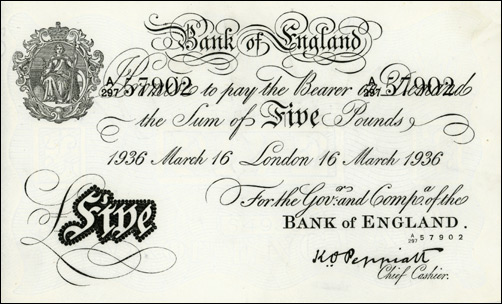
Last night, I went with a friend to see the movie "The Counterfeiters." I highly recommend this movie, but I will caution any prospective viewer that it is not for the faint of heart. The movie reprises the story (previously unknown to me) about the Nazi efforts to destabilize the British economy during World War II by counterfeiting the British pound.


Code named Operation Bernhard, this effort on the part of the Nazis might well have contributed to propping up the German war effort. One of the critical conflicts in the movie is between two counterfeiters. Since they were all Jews, and therefore at risk of being exterminated in the death camps, one of the counterfeiters, the lead character named Saloman, keeps adhering to the personal credo--better to counterfeit and live than resist and die. Another character, Burger, feels conflicted by their work. He believes they should resist. The tension frequently breaks out into violence among the counterfeiters--fighting each other.


Image of forged five pound note from
http://www.psywar.org/psywar/images/forgedfiver.jpg


There are two very poignant scenes in the movie. In one, one of the counterfeiters tries to assert his moral superiority because he says he was a banker before the war--not a counterfeiter. The irony is so thick in his statement.

In the second scene, the lead counterfeiter--Saloman (nick-named Sally and who had been a counterfeiter before the war) has asked for real documents to use in forging--for example, passports so the covers will be authentic. When the group gets a packet of real documents, one of the counterfeiters breaks down when he sees his own children's passports in a batch that were shipped from Auschwitz.


The counterfeiting operation was set up in the Nazi camp of Sachsenhausen. This is the camp that had the infamous gates with the slogan Arbeit Macht Frei--work makes free. In the case of the counterfeiters, even though their fate was to be death, the slogan was prophetic. For reasons not shown in the movie, they did all survive.

If you want a challenging movie that once again explores the theme of doing something "bad" with a good outcome--survival--see "The Counterfeiters." I found myself making mental comparisons to another recent movie that explores a very similar theme--"The Black Book" or "Zwartboek."

While the focus of the movie is clearly on the Jews in the horrific circumstances of the Nazi death camps, there are scenes that explore the actions of the Germans. I couldn't help but think once again of the question that haunts me--would I be so easily swayed to turn into the mindless majority as did the Germans during the Nazi era? There is no easy answer to such a question. The events of the current U.S. war in Iraq bring home to us the fact that seemingly good people can be too easily swayed by events and presumed authority.

Tuesday, August 07, 2007

Fair and Balanced?

I am not shilling for Fox News by the title of this post—in fact, I can barely bring myself to watch Fox News, but I want to pose the same question that their signature byline statement should urge us to consider. (I say "should" ironically because the last thing Fox News wants to be is “fair and balanced.”)

This past week’s news coverage in the U.S. has shown in stark contrast how little attention our national news sources pay to various countries in the world. For a long time, the “rule of thumb” for local news has been “if it bleeds, it leads.” And it seems the rule of thumb for
national news is “if it happened in the U.S., it leads.”

Here’s a quick test—how many people died in a
major train crash in the Democratic Republic of Congo (DRC) last week? OK. Now, how many people died when the I-35W bridge collapsed in Minneapolis?

My guess is you know the answer to the second question, and didn’t even know about the first question. Briefly, over 100 people died in DRC, and 5 people died in the bridge collapse, although this number may go a bit higher as bodies are recovered.

So what, you might ask? Well, each of these disasters occurred on the SAME DAY—August 2. Yet, national television news coverage in the U.S. has extensively covered the Minneapolis story, and I have yet to see any television mention of the Congo crash. The only press coverage I came upon in the U.S. was a 1 inch story in the NY Times. And, while looking for coverage of this story, I did come upon an online story on the Congo crash on USA Today.

And what does any of this has to do with your day to day life, you might ask next. Well, maybe nothing. There is no requirement that any of us be attuned to what is happening elsewhere in the world. However, I would suggest that if we want to be good citizens of the U.S., and even of the world, we need to have some sense of what happens. Absent information, how can we determine whether our national leaders are representing us well?

I am on a national advisory committee for the Presbyterian Church; this committee overseas collecting and distributing money in response to various disasters around the world. Our committee knows that charitable giving tracks almost exactly the amount of news coverage a given disaster receives. So, after Hurricane Katrina, millions of dollars were donated to
Presbyterian Disaster Assistance, but when the earthquake in Pakistan occurred the same year, few contributions came in. Of course—people won’t or can’t respond to things they don’t know about.

I will throw one more observation into this mix—for a long time, I have been concerned that U.S. news organizations do not pay enough attention to news stories coming out of Africa. (I remedy that by reading
BBC News online.) It would be easy to ignore this large continent that many U.S. citizens will never see. But, there is one country in the world that is not ignoring Africa—China. China is pouring astonishing amounts of money into various African countries. Here’s just one such story.

I suppose along about now, I should be drawing some conclusions. No—I think I will let you draw your own conclusions.


Note about the photos used above--the Minneapolis bridge photo came from CNN. When I went looking for a photo of the Congo train crash, I couldn't find one--but I did find a DRC map. . .on the Al Jazeera website. Folks, the rest of the world is paying attention to Africa!

Wednesday, February 07, 2007

Smoking Jackets and Practical Coats

One of the most formative events in shaping my personality is the fact that when I was 15 my parents, who were missionaries in Africa, returned to the mission field. We had been home on furlough, a year long respite, and it was time for them to resume their service. Since I was in 10th grade, and a typical mission term at that time was five years, we pondered long and hard.

My parents very much involved me in their decision making—should I return to Africa with them only to have to come back in three years for college, or should I stay here from the outset? As a young (and foolish) teen, I was rooting to stay here. What teen wouldn’t say—oh yes, I can manage on my own? Well, not really on my own, as I would stay for one year with my aunt, my mother’s sister, then for the remainder of the five years, with my uncle, my father’s brother.

So the decision was made—I would stay in the U.S., my parents would go to Africa with my younger brother and sister.

When I moved to be with my uncle and aunt, the adventures began. They had never had children and suddenly here they had not only a child for whom they were in every way responsible—but a 16 year old at that!

With the long view of time having past, I can look back and know how good they were to me. They were very strict—I can remember lying in my bedroom with my pink plastic radio listening to. . .rock ‘n’ roll, with the volume turned down oh so low, so they wouldn’t hear. I was not allowed to date at all. When I would be out with girlfriends, I kept saying—I have to go, my uncle and aunt expect me to come home.

And they did not drive me to any school events. Somehow I managed to be in a play in school and hitch rides to get to practice, to be in school choir, and to get to all the home football games.

Perhaps the strongest memory I have is of my aunt insisting, when I would buy clothing , that I make sure whatever the item was be practical. The one shopping trip that I remember so clearly was when we went to buy me a winter coat. We drove to downtown Harrisburg to Pomeroy’s Department Store. I have no recollection of what types of coats we might have looked at, but I most certainly remember what I bought.

My aunt picked out a pea-soup green wool coat. It was straight from shoulder to knee with a small Peter Pan color. She admired it and said “It is so practical.” I recall that I instantly disliked it. Actually, make that HATED it. I assume there were other coats I liked better that weren’t practical. But I bought the practical coat.

Around this time, and completely disconnected from the coat purchase, another aunt—who has always been one of my favorites—sent me a gift. My father’s sister, she is 14 years my senior. When I was growing up, she took me to symphonies and movies, which seemed such a grown-up thing to do. It is hard to capture in words my affection for her. But she always seems to do the right thing unbidden.

The gift she sent me was a lovely velveteen blazer style jacket. It had an unusual pattern of deep greens and blues, almost peacock like. It was immediately dubbed my smoking jacket, because that’s what it put me in mind of—those old-fashioned brilliantly colored jackets that had no use except to be worn in drawing rooms where cigars were smoked!

Oh, how I loved that jacket. It was so utterly impractical, yet I wore it as much as I could. Over time, it wore out and was consigned to a clothing bin or the trash. Recently, while out shopping, I saw another blue and green utterly impractical jacket, and snatched it up without a moment’s hesitation.

Oh—the pea green practical coat? I wore it rarely and grudgingly and hated it every minute. Soon after I married, when we were living on a tight budget, I asked my husband if he minded if I got a new winter coat—and ditched the practical one! He didn’t mind at all.